+86 139-6715-0258
 Monday to Friday 8 am. to 6 pm.
 English
 中文简体
中文简体Content
Food packaging engineers face critical challenges when selecting materials for liquid plant-based beverages. The packaging must prevent oxidation, maintain sterility, and withstand distribution stresses. This article examines the material science and processing technology behind Soy Milk Bag CPP/PE Film solutions for commercial dairy alternatives.
Co-Extruded Film Structure Engineering
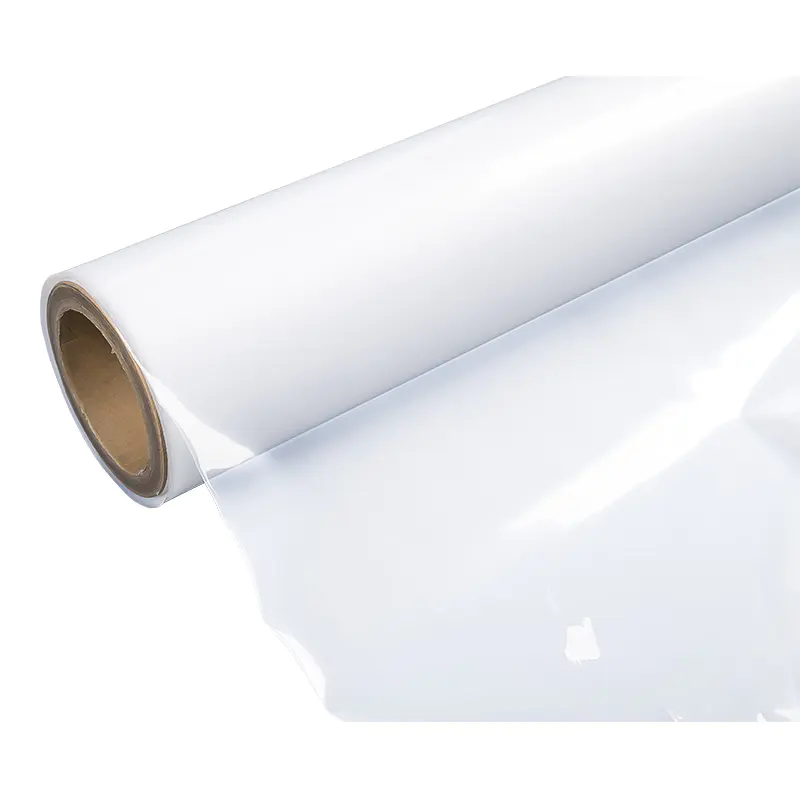
Cast polypropylene (CPP) and polyethylene (PE) multilayer films provide optimal performance for aseptic liquid packaging. Food-grade CPP/PE multilayer film constructions typically utilize three to five layers, each serving distinct functional requirements. The outer CPP layer offers heat resistance and printability, while the inner PE layers provide seal integrity and chemical resistance.
Co-extrusion technology enables the simultaneous extrusion of multiple polymer melts through a single die. This process creates molecular bonding between layers without adhesive interfaces that could compromise food safety. Layer thickness precision reaches ±5% through automated gauge control systems.
- The outer CPP layer provides dimensional stability at filling temperatures up to 95°C.
- Adhesive tie layers ensure interlayer bonding and prevent delamination
- EVOH or PA barrier layers block oxygen transmission for extended shelf life
- Inner PE contact layers ensure food safety and heat seal performance
Barrier Performance Specifications
Oxygen transmission rate (OTR) determines product shelf life and flavor stability. Standard CPP/PE structures achieve 50-100 cc/m²/day at 23°C and 0% RH. High-barrier soy milk packaging film incorporates ethylene vinyl alcohol (EVOH) or metallized layers to reduce OTR below 1 cc/m²/day.
Water vapor transmission rate (WVTR) prevents moisture loss and package deformation. PE-rich inner layers provide hydrophobic protection with WVTR values of 5-10 g/m²/day. This performance maintains product viscosity and prevents package wrinkling during distribution.
Mechanical Properties and Handling Performance
Form-fill-seal operations demand specific film characteristics. Flexible packaging film for liquid food must exhibit balanced tensile strength, elongation, and modulus for high-speed processing. Excessive stiffness causes forming difficulties, while insufficient strength risks burst failures.
Impact resistance ensures package integrity during dropping and stacking. Dart drop testing (ASTM D1709) measures puncture resistance. Soy milk bags typically require impact strengths exceeding 200g to survive distribution handling.
| Property | CPP Layer | PE Layer | Composite Function |
| Tensile strength (MD) | 35-50 MPa | 20-30 MPa | Structural integrity |
| Elongation at break | 500-700% | 300-500% | Forming flexibility |
| Seal initiation temp | 140-160°C | 110-130°CHeat-seal | l window |
| OTR (cc/m²/day) | 150-200 | 50-80 | Barrier performance |
Coefficient of Friction Management
Film-to-film and film-to-metal friction coefficients affect processing efficiency. High COF causes sticking in formers and uneven unwinding. Low COF permits smooth transport but risks stacking instability. Engineers specify a static COF of 0.3-0.5 and a kinetic COF of 0.2-0.4 for optimal performance.
Anti-block additives prevent film-to-film adhesion during storage. Silica or talc particles at 500-2000 ppm concentrations create microscopic surface roughness without compromising optical clarity. Slip agents (erucamide or oleamide) migrate to surfaces to reduce friction.
Processing Technology and Equipment Compatibility
Vertical form-fill-seal (VFFS) machines dominate soy milk packaging operations. Aseptic soy milk bag film must accommodate filling speeds of 30-60 bags per minute without seal contamination or distortion. Film thickness typically ranges from 80-120 microns for 250-1000ml package sizes.
Heat seal characteristics determine package integrity. Polyethylene seal layers provide wide sealing windows (20-30°C) that accommodate machine variation. Seal strengths of 15-25 N/15mm ensure hermetic closure while permitting consumer opening without tools.
- Hot tack strength maintains seal integrity during product cooling
- Seal through contamination resistance accommodates minor product residue
- Peelable seal options provide controlled opening force for consumer convenience
- Reclosable zipper integration requires specialized film formulations
Printing and Decoration Capabilities
Surface print or reverse print techniques apply branding and regulatory information. Corona treatment at 38-42 dynes/cm surface tension ensures ink adhesion. Eight-color flexographic or rotogravure printing achieves high graphic quality with food-safe ink systems.
Matte or gloss finishes enhance shelf appeal. Matte finishes reduce glare and convey natural product positioning. High-gloss surfaces maximize color vibrancy and premium perception. Surface coatings provide additional scratch resistance during distribution.
Regulatory Compliance and Safety Standards
Food contact materials face stringent regulatory requirements. Soy Milk Bag CPP/PE Film must comply with FDA 21 CFR 177.1390 for laminates, EU Regulation 10/2011 for plastic materials, and GB 4806.7 for China market access. Migration testing confirms the absence of harmful substance transfer.
Heavy metal content, primary aromatic amines, and overall migration limits require laboratory verification. Declaration of compliance documentation accompanies each production lot. Third-party certifications, including BRC, ISO 22000, and FSSC 2200,0 demonstrate quality system maturity.
Sustainability and Environmental Considerations
Material reduction initiatives decrease environmental impact. Down-gauging programs maintain performance with 10-15% thickness reduction through improved resin formulations. Recyclable mono-material structures simplify end-of-life processing compared to multi-material alternatives.
Bio-based PE from sugarcane ethanol reduces fossil carbon content. Mass balance certification tracks renewable feedstock integration. These materials provide identical performance characteristics with reduced carbon footprint for sustainability-positioned brands.
FAQ
What is the typical shelf life provided by CPP/PE soy milk packaging?
Standard Soy Milk Bag CPP/PE Film structures provida e 6-12 months shelf life at ambient temperature. High-barrier EVOH-containing films extend this to 12-18 months. Aseptic processing combined with high-barrier packaging achieves room temperature stability without refrigeration for the full shelf life period.
Can CPP/PE film withstand hot-fill processing?
Engineered structures accommodate hot-fill temperatures up to 85°C through material selection and layer optimization. High-heat CPP outer layers maintain dimensional stability during filling. PE inner layers provide seal integrity despite thermal stress. Cold-fill or aseptic processes are more common for extended shelf life applications.
How does film thickness affect packaging performance?
Thickness directly correlates with mechanical strength and barrier performance. Standard 90-micron films suit 250ml packages with moderate distribution stress. 120-micron specifications accommodate 1000ml sizes and export shipping. Thinner 70-micron options reduce material consumption for short distribution chains with careful handling.
What testing validates seal integrity for liquid packaging?
Standard protocols include visual inspection, dye penetration testing, and burst testing. Vacuum decay methods detect microleaks non-destructively. Seal strength testing (ASTM F88) quantifies mechanical performance. These procedures ensure food-grade CPP/PE multilayer film packages maintain sterility throughout distribution.
References
- ASTM F88-15. Standard Test Method for Seal Strength of Flexible Barrier Materials. ASTM International.
- ASTM D1709-16. Standard Test Methods for Impact Resistance of Plastic Film by the Free-Falling Dart Method. ASTM International.
- FDA 21 CFR 177.1390. Laminate Structures for Use at Temperatures Between 120°F and 350°F. U.S. Food and Drug Administration.
- EU Regulation 10/2011. Plastic Materials and Articles Intended to Come into Contact with Food. European Commission.
- Yam, K.L. The Wiley Encyclopedia of Packaging Technology. John Wiley & Sons, 2023.